Introduction
As lithium-ion batteries power everything from electric vehicles and marine equipment to industrial tools and energy storage systems, fire safety risks are evolving rapidly. Understanding the difference between a lithium battery fire vs normal fire is critical for businesses, operators, and safety professionals responsible for protecting assets and lives.
Unlike conventional fires fueled by combustible materials like wood, fuel, or plastics, lithium battery fires behave differently, spread faster, and require specialized containment strategies.
What Is a Normal Fire?
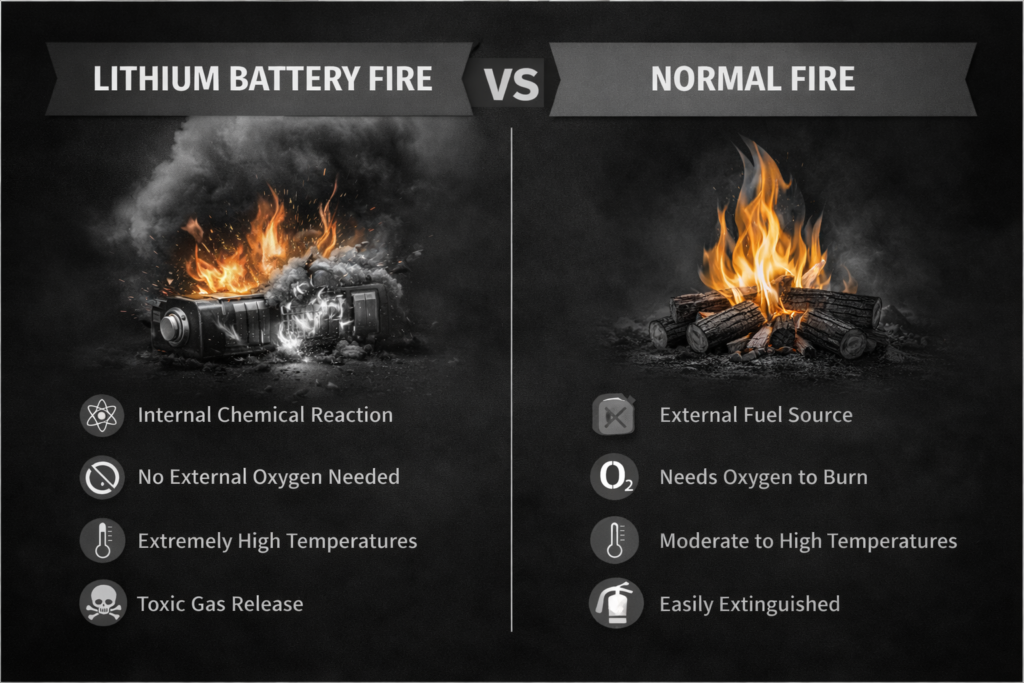
A normal fire occurs when combustible materials ignite in the presence of heat and oxygen. Common examples include electrical fires, fuel fires, and structural fires involving wood or textiles.
Characteristics of Normal Fires:
- Requires external oxygen to sustain combustion
- Can often be controlled with water or standard fire extinguishers
- Predictable spread patterns
- Managed using conventional fire suppression methods
Normal fires follow the traditional fire triangle — heat, fuel, and oxygen — which allows emergency responders to extinguish flames by removing one of these elements.
What Is a Lithium Battery Fire?
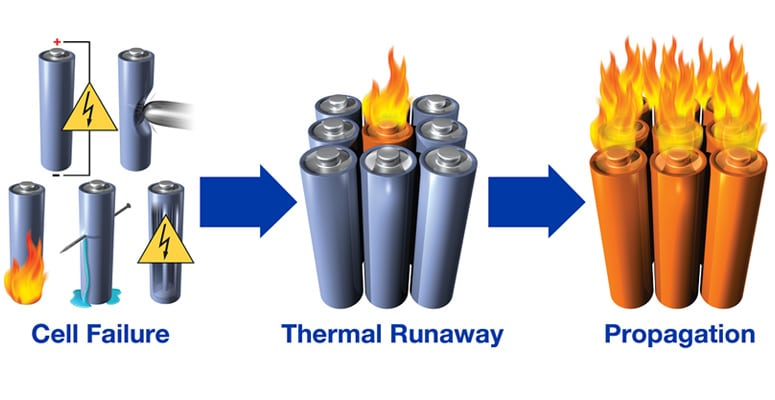
A lithium battery fire occurs when internal chemical reactions cause overheating and trigger thermal runaway, leading to intense flames, toxic gas release, and possible explosions.
Unlike normal fires, lithium battery fires are self-sustaining, meaning they can continue burning even when oxygen is limited because the battery contains internal energy sources.
Key Characteristics:
- Extremely high temperatures (often above 1000°C)
- Rapid escalation and unpredictable flare-ups
- Release of flammable gases and toxic fumes
- Risk of re-ignition even after extinguishing attempts
Lithium Battery Fire vs Normal Fire: Key Differences
Understanding the difference between a lithium battery fire vs normal fire helps organizations adopt proper safety measures.
| Feature | Lithium Battery Fire | Normal Fire |
| Fire Source | Internal chemical reaction | External fuel source |
| Oxygen Dependency | Can burn without external oxygen | Requires oxygen |
| Temperature | Extremely high | Moderate to high |
| Spread Pattern | Rapid and unpredictable | Relatively predictable |
| Suppression Methods | Specialized containment needed | Standard extinguishers often effective |
| Re-Ignition Risk | Very high | Lower risk |
Major Risks Associated with Lithium Battery Fires
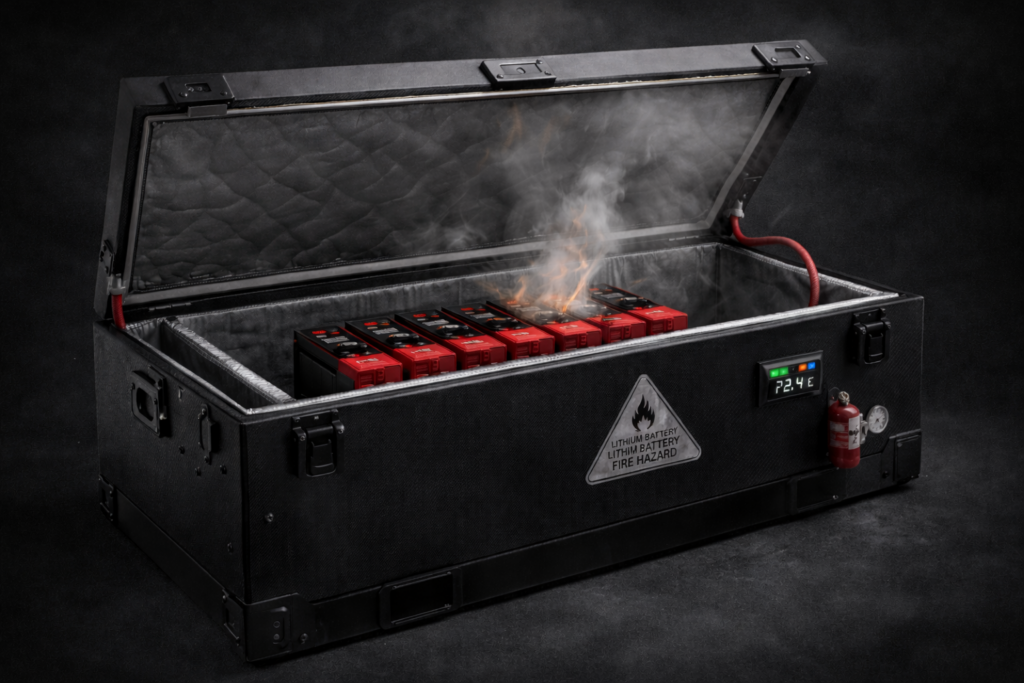
Lithium battery fires pose significantly greater challenges than conventional fires.
1. Thermal Runaway Chain Reaction
Once triggered, overheating spreads from cell to cell, escalating the fire rapidly.
2. Toxic Gas Release
Fires emit hazardous gases including hydrogen fluoride, increasing health risks.
3. Explosion Potential
Pressure buildup inside battery cells can cause violent ruptures.
4. Re-Ignition
Even after suppression, damaged batteries can reignite hours or days later.
How to Prevent Lithium Battery Fires
Organizations handling lithium batteries should implement proactive safety measures:
- Use certified battery storage and containment systems
- Monitor temperature and charging cycles
- Avoid overcharging and physical damage
- Store batteries in controlled environments
- Train teams in lithium battery fire response procedures
Fire Response: Lithium Battery vs Normal Fire
Standard firefighting approaches may not work for lithium battery fires. Water alone may be insufficient, and incorrect suppression methods can worsen the situation.
Instead, specialized containment, cooling strategies, and isolation techniques are often required to prevent escalation and re-ignition.
Conclusion
Understanding the differences between a lithium battery fire vs normal fire is essential as battery adoption continues to grow across industries. Lithium battery fires behave differently, escalate faster, and require specialized containment strategies beyond traditional firefighting methods.
By implementing proper storage systems, monitoring technology, and risk management practices, organizations can significantly reduce fire hazards and ensure safer operations.
About LioShield
LioShield develops advanced lithium battery fire containment and safety solutions designed for marine, industrial, and high-risk environments. Engineered with high-temperature resistant materials and smart safety design, LioShield helps organizations minimize battery fire risks and enhance operational safety.
Contact Us
Looking to improve lithium battery safety and fire containment in your operations?
Contact LioShield to explore advanced storage, containment, and compliance solutions tailored to your industry.